Cyren Omni-Channel Link Intelligence

Secure links across email, Slack, Teams, SMS, and cloud collaboration platforms with real-time URL intelligence.

Real-Time URL Intelligence That Protects Every Click

How the Solution Works

Cyren Omni-Channel Link Intelligence protects organizations by analyzing malicious links in real time, enabling early detection of phishing URLs and dangerous destinations across collaboration platforms. Powered by Cyren GlobalView™ intelligence and Data443 integrations, the platform evaluates domains, IP infrastructure, and redirect behavior to determine whether a link represents a security risk.

Security teams can deploy protection through APIs, SDK integrations, or security platform connectors without modifying existing collaboration or messaging environments.

The Security Gaps in Traditional Email Protection

Traditional email gateways protect inboxes, but modern phishing attacks increasingly target links shared outside email environments. Security operations teams can integrate Cyren threat intelligence into SOC workflows and SIEM platforms such as Microsoft Sentinel to detect malicious links earlier.

Users now click links through:

  • Slack and Microsoft Teams
  • SMS and mobile messaging
  • Shared cloud documents
  • PDFs and file attachments
  • Browser-based collaboration tools

Security teams often have limited visibility into these link interactions, creating a significant blind spot for phishing detection.

The Solution

Click-Time URL Intelligence

Cyren evaluates links at the moment of interaction instead of relying only on static blocklists. The platform analyzes destination infrastructure, redirect chains, and domain relationships to determine whether a link is malicious. This allows organizations to detect threats that traditional security tools miss.

Real-Time URL Classification

Analyze URLs at click time using global threat intelligence.

Infrastructure Intelligence

Evaluate domains and IP infrastructure to identify malicious hosting environments.

Identity Correlation

Enrich link intelligence using TacitRed identity intelligence signals.

Time-Bomb URL Detection

Detect links that appear safe initially but later redirect to phishing or malware sites.

Sub-Second Security Enforcement

Provide API responses in milliseconds to block malicious connections instantly.

Book a walkthrough and see how attackers exploit messaging platforms, documents, and mobile workflows to deliver malicious links.

Real-Time URL Threat Intelligence Architecture

Detect Time-Bomb URLs

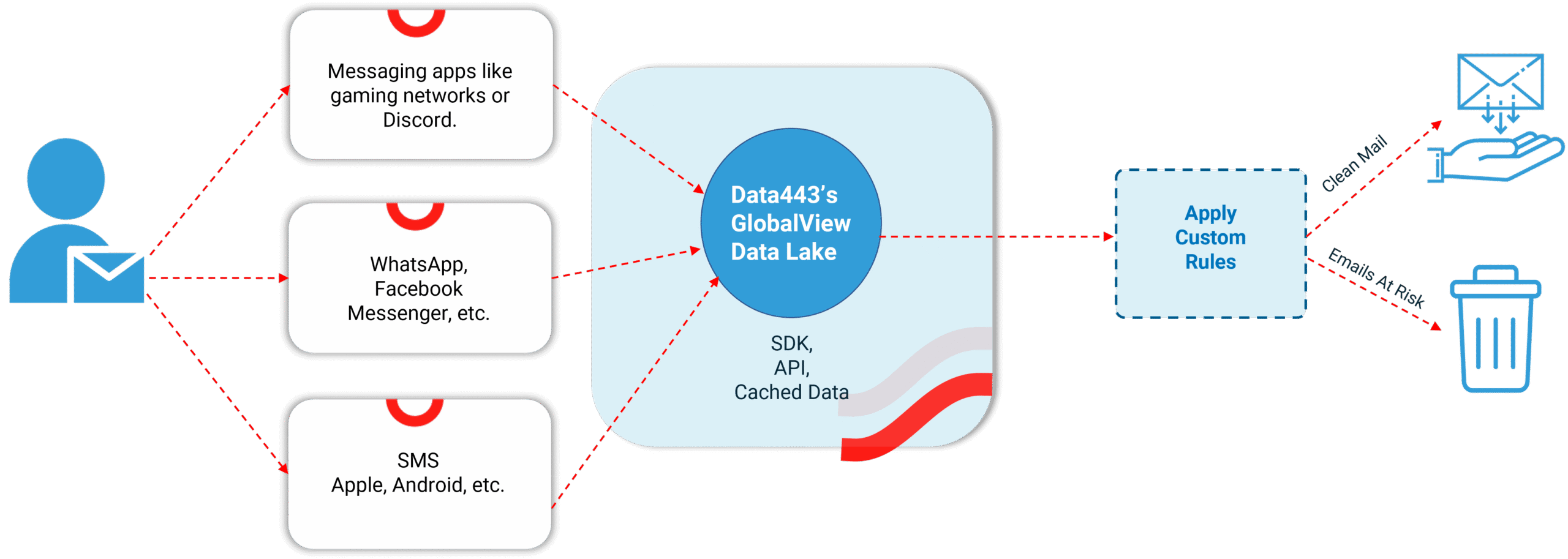
Cyren APIs and SDKs integrate messaging platforms, browsers, and mobile applications with the GlobalView™ URL threat intelligence platform to provide real-time URL classification and phishing link detection.

By analyzing redirect chains, domain infrastructure, and hosting relationships, Cyren detects time-delayed phishing attacks and malicious URLs before users reach dangerous destinations.

Organizations can deploy link intelligence across multiple environments:

  • Browser security extensions
  • Collaboration platform integrations
  • Mobile security workflows
  • SIEM enrichment through Microsoft Sentinel for SOC investigations
  • Endpoint enforcement through CrowdStrike and SentinelOne integrations

Collaboration Platform Security

An employee clicks a malicious “system update” link shared in Slack.
Cyren evaluates the link infrastructure and blocks credential harvesting before the page loads.

Safe Document Sharing

An employee opens a PDF containing a malicious URL.
Cyren analyzes the link at click time and prevents the connection to the malicious site.

Secure Mobile Workflows

A field employee receives a phishing link through SMS.
Cyren detects the malicious infrastructure and blocks the connection to the command-and-control server.

Competitor Comparison

Why Cyren Omni-Channel Link Intelligence Outperforms Traditional Web Security?

Cyren combines real-time URL threat intelligence and infrastructure analysis to detect malicious links across collaboration platforms, messaging apps, documents, and mobile workflows.

Vendor Typical Limitation Cyren Advantage
Cisco Secure Email
Email-centric enforcement
Channel-agnostic protection ✅
Zscaler
Heavy proxy architecture
Lightweight API integration ✅
Legacy Web Gateways
Static URL lists
Real-time intelligence ✅
Standard Web Filters
Limited context and prioritization
Global telemetry analysis ✅
Blue Coat
Legacy filtering infrastructure
Infrastructure-driven detection ✅

Data443 Integrations — Identity & Intelligence Alignment

Cyren and TacitRed integrate with modern SOC platforms including Microsoft Sentinel, CrowdStrike Falcon, SentinelOne, and Microsoft Defender.

Together these integrations ensure that click-time detections translate into automated security enforcement across the environment.

Cyren Omni-Channel Link Intelligence FAQs

Does Cyren only protect email links?

No. Cyren provides click-time URL classification across email, Teams, Slack, SMS, shared documents, and web applications.

What makes Cyren different from traditional web filters?

Traditional web filters rely on static lists. Cyren uses real-time infrastructure intelligence and dynamic global telemetry to detect fast-moving phishing and malware campaigns.

How does Cyren detect phishing earlier than native filters?

Cyren focuses on infrastructure intelligence — tracking newly registered domains, short-lived URLs, IP reputation signals, and hosting patterns. This allows earlier detection of zero-day phishing campaigns before content-based systems react.

Is Cyren integrated into the Data443 platform?

Yes. Cyren is part of Data443’s unified intelligence ecosystem. It connects with TacitRed identity intelligence and SIEM integrations for automated investigation and enforcement.

Does Cyren require heavy proxy or network deployment?

No. Cyren uses a lightweight API-first architecture designed for easy integration into browsers, proxies, and collaboration platforms.

How does Cyren handle time-bomb URLs?

Cyren performs classification at click-time, allowing detection of URLs that appear clean at delivery but become malicious later.